
Why Your Arms Are Not Growing and How to Fix It
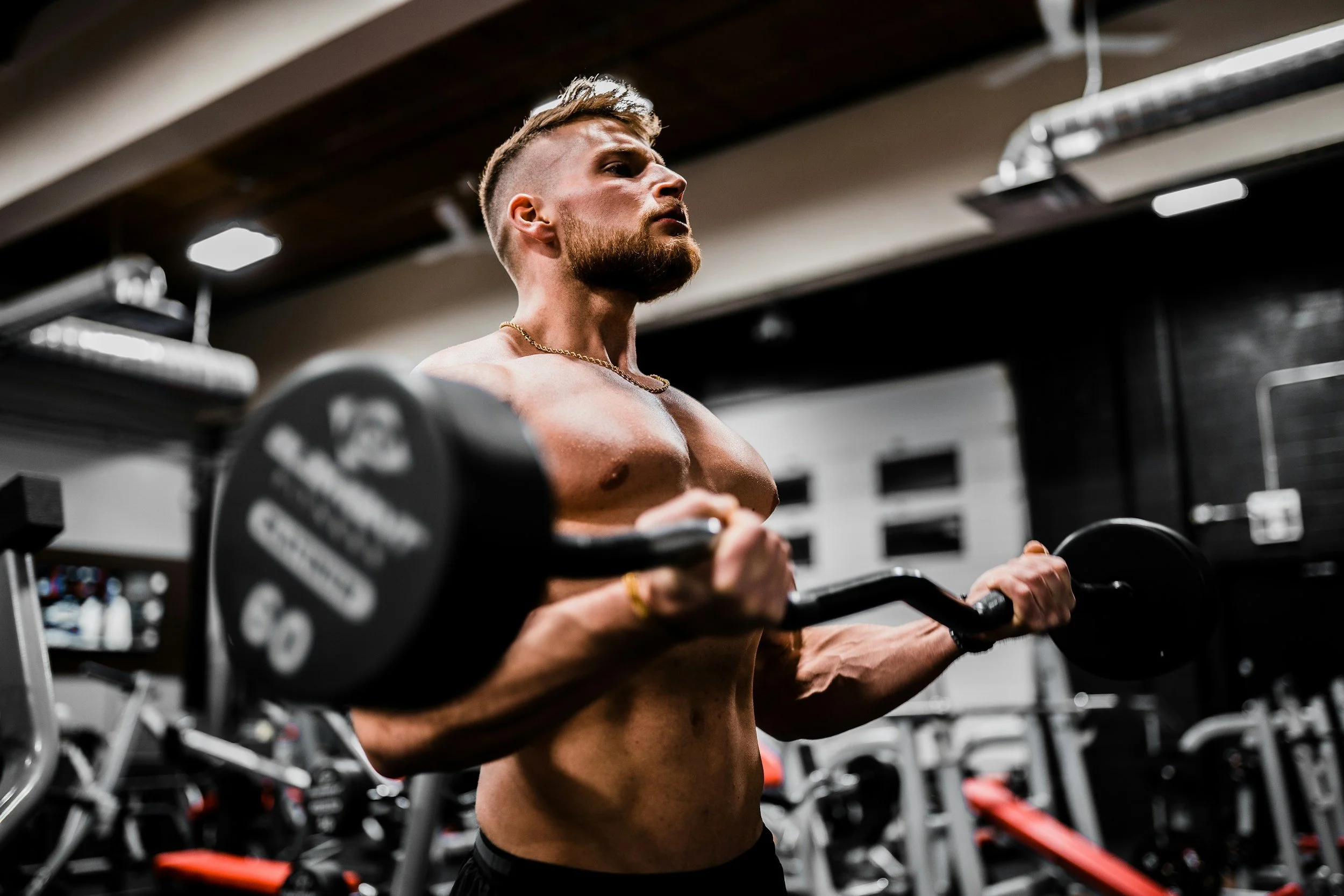
If your arms are not growing, the problem is probably not your effort. Most lifters are willing to train hard. They chase the pump, push through tough sets, and dedicate entire workouts to arm training. Yet despite all that effort, their arms stay the same size.
That is where frustration sets in.
The truth is that arm growth is not just about working harder. It is about training smarter. If your strategy is off, you can do everything right in terms of effort and still get poor results. Bigger arms require the right combination of exercise selection, structure, and progression.
In this article, you will learn exactly why your arms are not growing and what you need to change to fix it.
Why Most Arm Training Fails
Most arm training fails because it is built around the wrong idea. People assume that since the arms are smaller muscles, they just need more direct work. So they add more curls, more pushdowns, and more random variations.
At first, this might produce results. Beginners often grow from almost anything. But over time, progress slows down. The pump is still there, but the size does not increase.
This happens because effort is not the same as effective stimulus. You can feel your arms working without creating the conditions needed for growth. If your training does not include enough tension, enough total muscle recruitment, and enough progression, your arms will not have a reason to grow.
Mistake #1: You Only Train One Grip
One of the most common issues in arm training is relying on a single grip. Most lifters perform curls with a supinated grip, where the palms face up. While this is effective for targeting the biceps, it is not enough for complete arm development.
The arms are made up of more than just the visible biceps. The brachialis and brachioradialis play a major role in how thick and complete your arms look. If these muscles are underdeveloped, your arms will lack size even if your biceps are strong.
When you only train with a supinated grip, you bias the biceps and neglect these other muscles. This limits overall growth and prevents your arms from reaching their full potential.
How to Fix It: Train Multiple Grips
To build bigger arms, you need to train with different grips. Each grip shifts emphasis to different muscles and helps create more complete development.
Hammer curls are one of the most effective additions you can make. Using a neutral grip, hammer curls place more stress on the brachialis and brachioradialis. This helps build thickness and adds size to the upper and lower portions of the arm.
You can also include reverse curls and other variations to further develop the forearms. The goal is not to replace supinated curls, but to complement them.
When you train multiple grips, you build arms that are not just bigger, but more complete.
Mistake #2: You Rely Too Much on Isolation Exercises
Another major issue is relying too heavily on single joint exercises. Many lifters build their entire arm workout around curls, pushdowns, and similar movements.
While these exercises have value, they should not be the foundation of your training. Isolation movements involve less total muscle mass and limit how much weight you can use. This reduces the overall training stimulus.
Muscle growth is driven by tension and demand. The more muscle you recruit and the more load you can handle, the greater the growth potential. Isolation exercises alone do not provide that level of stimulus.
How to Fix It: Prioritize Compound Movements
Compound exercises should form the foundation of your arm training. Movements like chin ups, underhand pulldowns, rows, dips, and pressing variations heavily involve the arms while also recruiting larger muscle groups.
These exercises allow you to use more weight and create more overall fatigue. This leads to a stronger growth stimulus compared to isolation work alone.
Your arms are heavily involved in pulling and pressing. By getting stronger in these movements, you naturally build bigger arms.
Isolation exercises should still be included, but they should come after your compound work. Think of them as a way to finish the muscles, not the main driver of growth.
Mistake #3: Your Exercise Order Is Wrong
Even if you are doing the right exercises, poor exercise order can limit your results. Many lifters start their workouts with curls or tricep isolation work because they want to feel the muscles immediately.
The problem with this approach is that it pre fatigues the arms before you perform your most important movements. By the time you reach compound exercises, your performance is already reduced.
This leads to less weight lifted, fewer reps, and a weaker overall stimulus.
How to Fix It: Structure Your Workouts Properly
To maximize growth, you should start your workouts with compound movements. This is when you are fresh and able to produce the most force.
After completing your main lifts, you can move on to isolation exercises to fully fatigue the muscles.
A simple structure would look like this:
Start with chin ups or underhand pulldowns. Follow that with a pressing movement like close grip bench press or dips. Then move into hammer curls and other isolation work.
This approach ensures that you get the most out of your highest value exercises while still finishing with targeted arm work.
What Actually Drives Arm Growth
Arm growth comes down to a few key principles. Understanding these will help you make better decisions in your training.
Mechanical tension is one of the most important factors. This comes from lifting challenging weights with good control. The more tension you place on the muscle, the stronger the growth signal.
Total muscle recruitment is another key factor. Exercises that involve more muscle mass create a greater overall demand on the body. This leads to better growth potential.
Progressive overload ties everything together. Over time, your training needs to become more challenging. This can be done by increasing weight, reps, or overall workload.
If your training does not include these elements, progress will eventually stall.
How to Build Bigger Arms
Building bigger arms does not require a complicated program. It requires a structured approach that focuses on the right priorities.
Start each session with compound movements that heavily involve the arms. Focus on getting stronger over time.
Add isolation exercises after your main lifts. Use these to target specific muscles and create additional fatigue.
Train your arms using multiple grips and angles. This ensures complete development and prevents weak points.
Track your progress and aim to improve over time. Consistency and progression are key.
Common Mistakes That Still Hold You Back
Even with a solid program, there are a few common issues that can slow down your progress.
Too much variation can make it hard to track improvement. If you change exercises every week, you will not know if you are getting stronger.
Poor technique reduces the effectiveness of your training. Swinging weights and using momentum takes stress away from the target muscles.
Lack of recovery can also limit growth. Your arms are involved in many upper body movements, so they need time to recover between sessions.
Nutrition plays a role as well. Without enough calories and protein, your body will struggle to build muscle.
Putting It All Together
A well structured arm focused session might start with chin ups or underhand pulldowns. This would be followed by a pressing movement like dips or close grip bench press.
After that, you could include hammer curls and traditional curls to target different parts of the arm. Finish with tricep isolation work to fully fatigue the muscles.
This approach allows you to train with enough intensity, variety, and structure to drive growth.
Conclusion
If your arms are not growing, it is not because you need more effort. It is because your current approach is limiting your results.
By training with multiple grips, prioritizing compound movements, and structuring your workouts correctly, you create a much stronger environment for growth.
Arm training is not about doing more. It is about doing what works.
When you focus on the right principles and stay consistent, your arms will start to grow.