
Stop Event Training: Go Back to the Basics (and Get Stronger Faster)
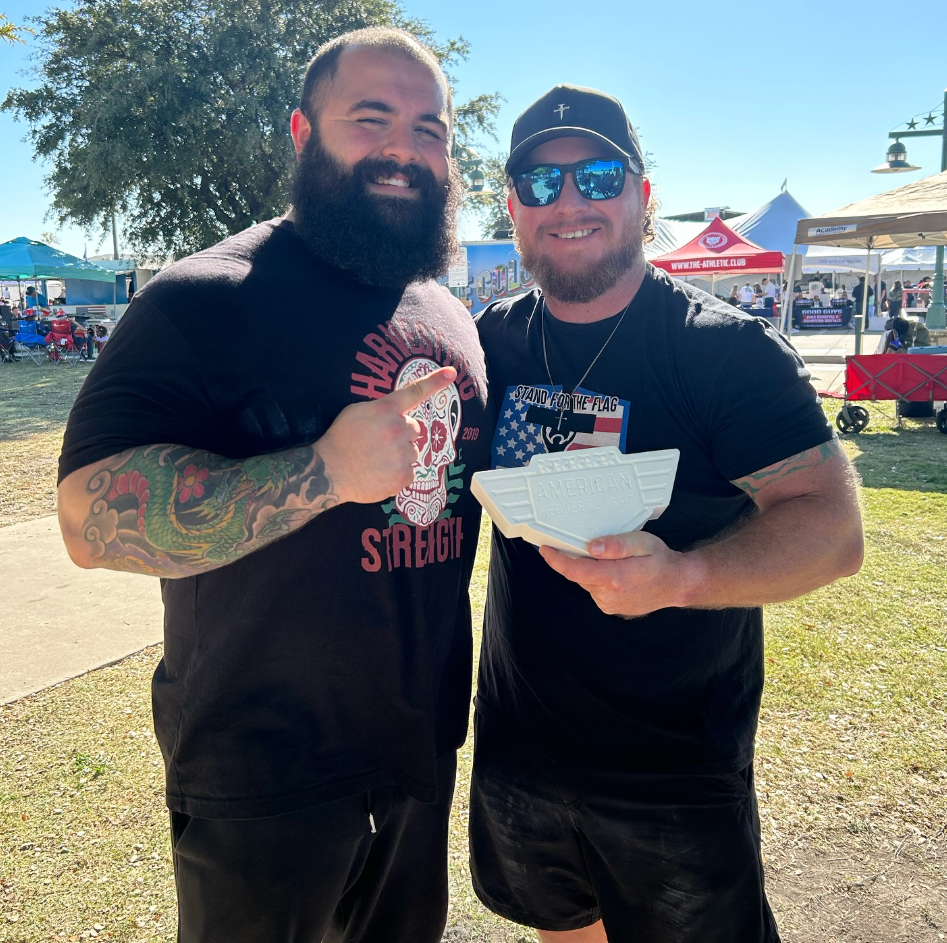
Cole qualified for 2026 Nationals by placing top 2 in the open division of his strongman competition!
Strongman has a weird problem right now.
Everybody “trains strongman”… but not everybody trains strength.
You see it every week: athletes spending most of their sessions on implements—yoke, farmers, stones, log, sandbags—then wondering why their numbers stall, why their back is always fried, or why they can’t recover long enough to string together good weeks.
Here’s the hard truth:
Event training is not the foundation. It’s the expression.
The foundation is still the basics = big strength movements, solid positions, progressive overload, and simple assistance work that brings up weak links.
This isn’t an anti-event rant. Events are the sport. You need them. But if your training has become nothing but implements, you’re basically playing the sport without building the athlete.
This blog will lay out:
Why too much event training slows progress
What “foundation” actually means for strongman
The core lifts that build 80% of your strongman strength
How to structure training so events improve because your base is stronger
A sample week and programming templates you can actually use
Let’s fix your training.
Why Event Training Becomes a Trap
Event training feels productive because it’s specific and hard. It’s also addictive because:
It looks cool
It’s measurable (“I did 800 for 50 feet”)
It feels like “real strongman”
It gives instant feedback
But “hard” and “specific” aren’t the same as “effective.”
1) Events Are High Fatigue for the Strength You Gain
Implements have a brutal fatigue-to-progress ratio. They’re often:
Awkward to set up
Hard to standardize week to week
Limited by equipment, space, and potentially weather
Highly taxing on joints and connective tissue
Demanding on stabilizers and grip in ways that crush recovery
You can get stronger doing events…but you’ll often gain strength slower than you would by building a bigger base with barbells and dumbbells.
2) Events Are Often Technique Bottlenecks, Not Strength Bottlenecks
Many athletes aren’t “weak”, they’re inefficient.
If your yoke collapses, it might be:
Bracing
Upper back position
Steps too long
Poor breathing pattern
If your log stalls, it might be:
Dip timing
Upper back tightness
Rack position
Weak triceps lockout
If your stones are inconsistent, it might be:
Lapping position
Arm length strategy
Foot placement
Trying to “fix” those problems by doing more events often just repeats bad reps under fatigue. Meanwhile, the muscles that could support better positions (upper back, trunk, glutes, hamstrings, triceps) aren’t getting built as effectively as they could.
3) Events Beat Up the Same Structures Over and Over
Strongman is inherently repetitive: bracing, grip, spinal loading, hip extension, upper back strain.
Events magnify that repetition, especially:
Yoke + farmers multiple times per week
Heavy sandbag carries often
Stones frequently
Max deadlift and frame pulls close together
That’s not “hardcore.” That’s a recovery debt.
And recovery debt is why your numbers don’t climb.
The Strongman Misunderstanding: “Specificity” Too Early
Specificity is powerful, but timing matters.
If your base is small, being specific just makes you better at expressing a small base.
Think of it like this:
The basics build the engine.
Events teach you to drive it.
If your engine is weak, driving lessons don’t matter.
When Event Training Helps Most
Event work is most productive when:
You have a solid strength base already
The contest is close enough to justify specificity
You can recover from the stress
The event work is targeted, not random
For most strongman athletes, especially newer ones, the best results come from:
Base building most of the year
Events focuses on phases
Not “events forever.”
What Are the “Foundational Basics” for Strongman?
Strongman is basically:
Pick something up
Carry something
Press something overhead
Load something onto something
…and so on! So what builds those abilities?
The Big Fundamentals for Strongman
If you build these movements, your strongman performance goes up almost automatically:
Squat pattern strength
Front squat
High bar squat
Safety bar squat
Hinge pattern strength
Deadlift variations
RDLs
Block pulls
Good mornings (carefully)
Overhead strength
Strict press
Push press
Incline press
Close grip bench (yes, bench)
Upper back and trunk
Rows, chins, pulldowns
Carries (yes, but structured)
Back extensions
Ab work that actually transfers (bracing + anti-rotation)
Grip and arms
Holds
Thick bar work
Heavy rows and pulls
Direct biceps/triceps (strongman secret weapon)
Events build skill. Basics build capacity.
The 80/20 Rule for Strongman Training
If you’re not prepping for a contest in the next 6–10 weeks, a good rule is:
80% basics / 20% events
Not because events are bad—but because basics are the fastest way to raise your ceiling.
Question: “But won’t I lose event mastery?”
No, you won’t…if you keep some exposure.
You don’t need to run a yoke weekly all year to stay good at yoke. You need:
A carry variation
A bracing demand
A moving-under-load stimulus
Occasional technique refreshers
That can be accomplished without beating yourself into the ground year-round.
The Foundation Lifts That Carry Over the Most
1) The Safety Bar Squat (or Front Squat)
Why it matters:
Builds upper back strength under load
Forces bracing and posture
Transfers to yoke and sandbag carries
Builds legs without the same beating as constant carries
How to use it:
3–6 reps for strength
6–10 reps for building legs
Paused reps for position
If your yoke folds you, your upper back is usually the issue—not your legs.
2) RDLs and Barbell Rows (The Back Builders)
Strongman is an upper-back sport disguised as a leg sport.
RDLs build:
Hamstrings
Glutes
Low back tolerance
Hinge mechanics
Rows build:
Lats
Mid-back
“Shelf” strength for carries and pressing
How to use them:
RDLs: 6–10 reps, controlled eccentric
Rows: 8–12 reps, strict-ish, heavy
3) Strict Press (Yes, Strict)
Log and axle reward leg drive, but your ceiling is still built by strict strength:
Better starting strength
Better stability
Stronger triceps and shoulders
Less reliance on timing
How to use it:
Main press day: strict press heavy (3–6 reps)
Second press exposure: incline or close-grip bench (6–10 reps)
4) Deadlift Variations That Build the Weak Link
Most strongman deadlifts fail because of:
Weak off the floor
Weak mid-range
Weak lockout
Or poor bracing and positioning
Pick variations based on your issue:
Off the floor: deficit deadlifts
Mid-range: bands or chains, RDLs
Lockout: block pulls, rack pulls (done correctly), isometrics
Bracing: front squats, SSB squats, heavy carries
5) Carries… Without Turning Your Week into a Car Crash
Carries are important. But “carry day” can destroy recovery if you go full send every week.
Use carries like a tool, not a personality trait:
One heavy carry exposure weekly in base phases
Keep volume controlled
Rotate implements if possible
Focus on quality steps and posture
The Problem with “Event-Only” Programming
When athletes mostly train events, they often end up with:
1) Lots of PRs… and no long-term progress
Because they’re testing themselves constantly.
Strongman athletes love “max effort.”
But if every week is a test, you never build enough to re-test higher.
2) Chronic pain masquerading as toughness
You can’t out-grind inflammation and connective tissue fatigue forever.
If your elbows hurt constantly, your pressing volume is probably chaotic.
If your low back is always tight, your hinge stress is unbalanced.
3) Weak links never get addressed
Events hide weaknesses because:
You can compensate with different positions
You can “muscle through”
You can use straps, tacky, suit, belt, etc.
The basics expose weakness and fix it.
What Base-Building Looks Like for Strongman
The base phase is where you build:
Bigger legs
Bigger back
More strict strength
More trunk stability
Better work capacity
A good base phase typically runs 8–16 weeks.
The Base Phase Priorities
Get stronger in 1–2 squat patterns
Get stronger in 1 deadlift pattern + 1 hinge accessory
Press twice per week (one strict, one supportive)
Pull/row twice per week
Add one carry / conditioning element (but not insane)
Build arms, grip, trunk like it matters (because it does)
Sample Weekly Training Split (Base Phase)
Here’s a simple template that works for most strongman athletes:
Day 1: Squat + Upper Back
Safety Bar Squat: 4–6 sets of 3–6
Front Squat: 3–4 sets of 6–10
Chest Supported Row: 4 sets of 8–12
Back Extensions: 3 sets of 10–15
Ab Wheel / Dead Bug variations: 3 sets
Day 2: Strict Press + Pull
Strict Press: 5 sets of 3–6
Incline DB Press: 3–4 sets of 8–12
Pull-ups or Lat Pulldown: 4 sets of 6–12
Lateral Raises: 3 sets of 12–20
Triceps: 3 sets of 10–15
Day 3: Hinge + Carry (Controlled)
Deadlift Variation: 4–6 sets of 2–5
RDL: 3–4 sets of 6–10
Carry (Farmers or Frame): 6–10 short runs (20–60 ft) at submax
Curls (yes): 3–4 sets of 10–15
Grip hold: 2–4 sets
Day 4: Overhead Support + Conditioning
Push Press or Close Grip Bench: 4–6 sets of 3–6
Pendlay Row or Barbell Row: 4 sets of 6–10
Lunges / Split Squats: 3 sets of 8–12 each leg
Light conditioning: sled drags, incline walks, bike intervals (10–20 min)
This is boring.
That’s the point.
Boring training builds scary strength.
How to Include Events Without Derailing Progress
You don’t need to abandon events. You need to control them.
Rule 1: Pick 1–2 events at a time
Not five. Not “whatever the group is doing.”
Example:
One carry event exposure
One loading event exposure
Rule 2: Cap intensity or cap volume
You can go heavy OR you can do a lot. Not both.
Examples:
Heavy yoke: 6–8 runs total, stop before form breaks
Volume yoke: lighter weight, 8–12 runs, crisp steps
Stones: 10–20 total reps, don’t turn it into a max session weekly
Rule 3: Use events as finishers sometimes
Instead of making them the main session.
Example:
After deadlifts, do 5–8 sandbag carries
After pressing, do light keg loads for conditioning
Events don’t always need to be the hero.
Transitioning from Base Phase to Contest Prep
Contest prep is where specificity goes up.
A clean transition looks like:
8–12 weeks base
6–10 weeks contest prep
In Contest Prep, Flip the Ratio
You move toward:
50–60% basics
40–50% events
But even then, basics remain the backbone:
Squat stays
Deadlift stays
Press stays
Rows stay
Assistance stays (reduced)
Events get added strategically:
Practice exact implements
Practice exact standards
Practice pacing for medleys
The Strongman Truth Nobody Wants to Hear
If your squat is weak, your yoke will always be limited.
If your strict press is weak, your log will always be fragile.
If your upper back is weak, your whole sport falls apart.
If your conditioning is trash, your strength will disappear by event three.
You don’t solve these problems by doing more events.
You solve them by becoming a stronger athlete.
Quick Self-Audit: Do You Need More Basics?
Answer these honestly:
Do you struggle to recover week to week?
Are you sore all the time?
Are your numbers stuck despite “training hard”?
Do you get small injuries constantly?
Do you avoid strict work because it’s humbling?
Does your event training feel random?
Are you always “peaking” but never improving?
If you said yes to 3 or more, you probably need a base phase.
A Simple 12-Week “Back to Basics” Plan (Outline)
Here’s a plug-and-play structure:
Weeks 1–4: Accumulation (Build)
Higher reps (6–10)
More back and leg work
Moderate carries
Strict press focus
Weeks 5–8: Intensification (Strength)
Lower reps (3–6)
Heavier deadlift and squat
Carries slightly heavier, lower volume
Pressing heavier
Weeks 9–12: Realization (Express)
Doubles and triples on main lifts
Keep assistance minimal but present
Events: small technique refresh, not maxing
Then you choose:
Another base block (if no contest soon)
Or contest prep (if you’re 6–10 weeks out)
Also, if you’re looking for a program, why not join Harvesting Strength? Not sure how we work with clients? Check out the video below for more information!
Conclusion: Be a Stronger Athlete, Not Just a Better Event Technician
Strongman is the sport of strength.
But the strongest athletes aren’t the ones who do the most events year-round.
They’re the ones who:
Build big foundational lifts
Train the back and trunk like it’s their job
Press with discipline
Respect recovery
Use events with purpose
Events show what you have.
Basics build what you can become.
So yes:
Please stop event training all the time. Go back to the basics.
Your next PR is waiting on the other side of boring, consistent strength work.